Monday, February 4, 2013

Samsung Galaxy S4 news - release date and more rumours

 Now our gadget-addled minds are turning to what Samsung has planned for its fourth S-series mobile.
Such is the merry march of progress, and as time stands still for no man (or mobile), here's everything we're expecting to see from the Galaxy S4, including news, specs and an educated guess at possible release dates.
Android and Samsung enthusiasts should bookmark this page, as over the coming months we'll be regularly updating it with fresh leaks, images and industry navel-gazing.

Is the Galaxy S4 real?

Samsung hasn't yet breathed a word about a follow-up to the Galaxy S3, except to deny rumours that the S4 will be coming out in February. The Galaxy S2 and S3 have proved extremely popular however, with Samsung recently boasting that it had shipped 20 million S3 units. In other words, unless Samsung suddenly becomes allergic to money, you can bet your bottom button it'll be releasing a follow-up next year.
That's good news, because Samsung's last few mobiles have been among the best Android phones ever created, with the S2 and S3 both proving worthy alternatives to Apple's planet-consuming iPhone.

What will the Galaxy S4 look like?

The Samsung Galaxy S3 looks very different to 2011's Galaxy S2, with a luxurious curved style that was a marked departure from its blocky predecessor. As such, it's hard to guess what the Galaxy S4 will look like, but there are a few clues to be gleaned.
5-inch, 440ppi screen?
The 5.5-inch Galaxy Note 2 has proved popular, so expect to see Samsung increase the display real estate from the S3's 4.8-inch screen.
Samsung recently dropped a massive hint that an as-yet-unnamed phone with a 5-inch, 1080p display is on the horizon, due to be revealed within the first three months of the year. Samsung's saying that panel will have 440 pixels per inch, which would beat the iPhone 5's 326ppi when it comes to packing in the pixels.
'Unbreakable' display?
No screen is truly unbreakable of course, not even those hovering shield screens they fight with in Dune, but rumours peg Samsung to be filling the Galaxy S4's screen with plastic substrate that will battle cracks and scratches, even if the phone takes a nose dive onto your patio.
No home button?
The S2 and S3 have both featured a physical home button underneath the screen, even as other mobiles such as the HTC One X or Samsung's own Galaxy Nexus ditch a central key in favour of touch-sensitive options.
I wouldn't be surprised to see Samsung keeping existing Galaxy owners satisfied by sticking with the home button, though a recent leaked snap that purportedly comes from within Samsung and shows the S4 is conspicuously lacking a home key.
Plastic fantastic
Samsung has an almost unhealthy obsession with creating smart phones that are as thin and light as possible, which is why even the physically huge Galaxy S3 feels like a helium-filled dove when you grip it in your hand. The Galaxy S2, Galaxy Note and Galaxy Note 2 are all eerily thin and light too, so count on Samsung's next flagship phone being even skinnier, and weighing practically nothing.
Unless miracle materials are discovered deep within the Earth's crust or mined from asteroidswithin the next year, that means the Galaxy S4 will probably be made of plastic, like the S3. Plastic is divisive among tech fans -- some enjoy the light, airy feeling, while some prefer the robust build quality that comes with a sturdy metal case.
Bendy screen?
Samsung recently showed off its 'Youm' flexible display technology, which lets a display wrap around a phone's casing -- check out the video embedded below to see it in action.While this technology is a tempting glimpse at the near future, I'd be surprised if Samsung chose it for the Galaxy S4, as it's likely to still be very expensive. The thought of a high-end smart phone with a wrap-around display certainly tickles our fancy though -- no harm in hoping, eh?
13-megapixel camera?
Both the S2 and the S3 sport 8-megapixel cameras, and while they're both decent smart phone snappers, the thought of beefing that sensor up to one that's a little more potent is a welcome one.
Rumours to that effect have emerged, and it wouldn't be the most outlandish development, but we'll still need to wait until we have it in our hands before we know for sure how decent a camera the next Samsung flagship will possess.

Weird stuff

So what about some kooky new tech? Holographic interface? Built-in fishbowl? The ability to turn into liquid and flush down a toilet?
All sorts of weird and wonderful features are bound to be rumoured for the Galaxy S4, but to be honest I expect Samsung will play it safe with its most important mobile, and release a bigger, more powerful smart phone -- the kind of procedural improvements we've seen Apple make with the iPhone 5.
As mentioned above, we know that Samsung is keen on flexible displays, and I've seen some of the company's transparent LCD panels, which are mouth-wateringly delicious. I'd love to see some of this wacky technology inside a new smart phone, but I think Samsung is likely to trial any especially unusual new features in a separate phone entirely -- see the projector-sportingGalaxy Beam, for instance.

4G?

I was impressed with the Samsung Galaxy S3 LTE -- a 4G-capable version of the S3 that is one of the first phones to work with EE's inaugural 4G network (check out our video review below these words).
In 2013, rival operators O2, Vodafone and Three are joining the 4G fray, so a big question for phone shoppers this year will be which smart phones support the speedier browsing speeds 4G provides.
If the Galaxy S4 works across all the major UK operators' 4G spectrum bands, that'll be a major selling point, especially as that's not something the iPhone 5 can currently claim (Apple's latest mobile will so far only work with EE's 4G in the UK).
My guess is the S4 will work across UK networks, seeing as Samsung already has the S3 LTE,which will work on every network, including the ones that aren't even set up yet.

Android Jelly Bean or Key Lime Pie?

Android 4.2 Jelly Bean is the latest version of Android, though current Samsung devices like the Galaxy S3 are running Android 4.1 Jelly Bean, a slightly earlier version that's missing a few features.
If the Galaxy S4 comes out at the end of May (which is when the S3 went on sale) I'd wager it's likely to be running Android 4.2 Jelly Bean. Like the confections they're named after, however, Android versions never stay fresh for long, and the follow-up to version 4.2 is already being spoken of. In keeping with Google's alphabetical naming conventions, it's rumoured to be dubbed Android Key Lime Pie.
I think we're unlikely to see Key Lime Pie arriving with the Galaxy S4, as Google usually chooses Nexus devices such as the Nexus 4 to debut a fresh version of Android.
Based on Google's history, I think it's more likely the Galaxy S4 will land running Android Jelly Bean 4.2, before getting updated to Key Lime Pie (or Kendal Mint Cake or Kellogg's Rice Krispie Cake or whatever it ends up being called).
Samsung is sure to opt for its own TouchWiz Android skin once more, so don't expect to see a vanilla version of Google's operating system powering the S4.

How about the name?

Tech companies are notoriously slippery when it comes to tech naming conventions ('new iPad', anyone?), but Samsung will want to trade on the positive vibes surrounding its Galaxy branding as much as possible. After the S2 came the S3, so for now at least S4 would seem to make sense.
To be totally accurate, the S II and S III have struggled along with Roman numerals that everyone has ignored, so it may well be the S IV, although that sounds like something you'd find in a hospital. Here's hoping Samsung can resist the urge to stick loads of Xs and +s and HDs on the end.

When will it come out?

The big question: when can you buy the Galaxy S4? Don't bother saving your pennies yet, as I don't think we'll see this phone until May. That's a full year after the Galaxy S3 went on sale, and Samsung will want to give its current phone a chance to mop up as much consumer cash as possible before bringing out a new version.
Rumours have pointed towards the Galaxy S4 being unveiled in February, at the Mobile World Congress trade show in Barcelona. While we'll certainly see a host of exciting new phones at that show, it's unlikely we'll see the Galaxy S4 among them.
Last year Samsung notably snubbed Mobile World Congress, instead throwing its own bash for the Galaxy S3, and I'd be jaw-to-the-floor flabbergasted if it didn't repeat the trick.
Expect an official airing sometime around May a few weeks before the phone hits shops shelves, and a bucketload of leaked images, specs and information in the meantime. Stay tuned, and let me know what you'd like to see from the Galaxy S4 in the comments below, or on our Facebook wall.

BLACKBERRY 10 LAUNCH - ALL ABOUT BB10 OS, Z10 & Q10

BlackBerry employees counting down to the official launch of the BlackBerry 10 devices.
Screen_Shot_2013-01-31_at_1_33_25_AM
It’s been a long time coming but finally, the day of the BlackBerry 10 devices have arrived. Now, RIM’s (now renamed as BlackBerry to avoid confusion) BB10 devices and the new OS has been an open secret for quite a while now and has been quoted to be the crux to BlackBerry’s revival in a day and age saturated with Android and iOS devices.
The OS is no stranger to coverage on our website of course – back in December last year, we took a good look at BB10 during BlackBerry Jam Asia 2012. The OS strives to conform to a natural experience and hence, all physical navigation buttons have been stripped down, resulting in a gesture-heavy experience. To meet the current needs of a constantly-evolving smartphone climate, emphasis has also been placed on creating a visually-pleasing user interface, a major shift from its traditionally text-heavy UI.
The Hub – the hive of activity on BB10. BlackBerry Hub is essentially what the People
Hub is to the Windows Phone 8 platform. In here, you get all your connections in
Screen_Shot_2013-01-31_at_2_31_42_AM
one place, be it your emails, contacts, Facebook, LinkedIn or Twitter.
We have mentioned it before but the BB10 experience is all about three keywords, flow, peek and hub. In a nutshell, content should “flow” continuously with users always able to “peek” at ongoing activity and notifications, without users having to go back and fro -; important information is, literally, at your fingertips in one central “hub”. Here’s a recap:
The BlackBerry 10 announcement has shown that what we first saw last year remains mostly unchanged, with a few updates on the current BB10 situation. For one, over 70,000 apps are available for BB10 OS right now, including popular apps like WhatsApp, Angry Birds and Skype. The new BlackBerry World app store will complement the growing pool of apps with the ability for users to purchase movies, music and other digital content. Eight major movie studios and music labels will be providing content in the BlackBerry World at launch.
In a bid to extend its diminishing stronghold on entreprise services, BlackBerry 10 comes with BlackBerry
Balance, a feature that allows you to switch from personal to work profile with a single swipe.
blackberry-10
Demonstrating BlackBerry ScreenShare, a feature which allows you to share your screen
with the person you are calling/video chatting via BBM.
The introduction of BlackBerry-flavored apps/features have also been added to the lineup, including BlackBerry ScreenShare, which allows you to share your screen with the person you are calling via BBM; BlackBerry Remember, a note-taking app that’s similar to Evernote and is integrated with your Evernote account; and BlackBerry StoryMaker, an app that allows you to create full-fledged slideshows with music, photos and videos. Of course, the new BBM, as its beta has already revealed, will allow users to voice as well as video chat with other BlackBerry owners for free over Wi-Fi.
Unveiling Of BlackBerry Z10 & Q10
blackberry-10-launch-event
BlackBerry Z10 and its Q10 QWERTY-equipped counterpart.
The flagship BlackBerry Z10 will be a full LTE-enabled touchscreen phone that will be offered in both black and white. While it comes with a dual-core processor, it stands pretty on par with the rest of the Android and iOS offerings, as you can see from below. The device will come onboard with 16GB of internal storage and the option to expand it via a MicroSD slot.
There’s no specific dates on local availability and pricing but BlackBerry has mentioned that by the end of February, BlackBerry will be completing Z10 lab testing with 110 carriers worldwide, Singapore included. Interested buyers living in UK are luckier – selected retailers will be selling the Z10 from tomorrow onwards. Pricing will vary from region to region, but to give a rough gauge of what to expect, price-wise, the Z10 willcost around $149.99 with a three-year contract in Canada and $199.99 on a two-year contract on Verizon in US.
Less information has been revealed about the LTE-enabled Q10 (previously known as the N Series and the X10), and much from what we already know were reiterated during the event, including emphasis on its familiar QWERTY keyboard and 3.1-inch, 720 x 720 display. The device will also be running on BlackBerry 10 of course, and will offer an identical software experience like its Z10 counterpart.
url
At this point in time, no specific pricing or availability has been revealed but the phone is set for a later retail date somewhere in April around the world.

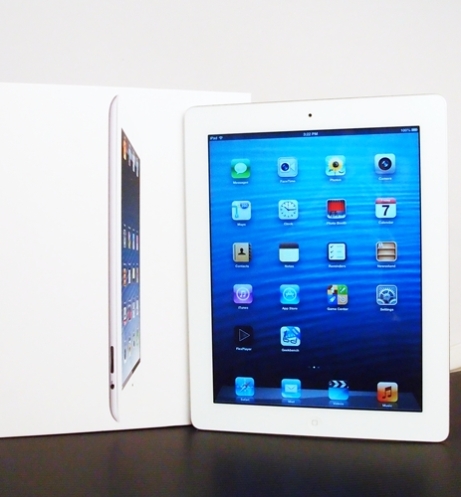
128GB Apple iPad fourth gen announced

The fourth generation Apple iPad.
Apple just announced a 128GB version of its fourth generation iPad with Retina display, which will come in Wi-Fi and Wi-Fi + 4G variants. The new model will be available from 5 February, Tuesday (US timing) in black or white for a recommended retail price of US$799 (Wi-Fi) and US$929 (Wi-Fi + 4G).

Locally, both editions will retail for S$1,048 (Wi-Fi) and S$1,218 (Wi-Fi + 4G) respectively. All versions of the 128GB iPad will be sold through the Apple Online Store, Apple retail stores and select Apple Authorized Resellers.
OLYMPUS DIGITAL CAMERAAccording to Philip Schiller, Apple’s senior president for worldwide marketing, increasingly people are relying on their tablets for both work and play and the massive 128GB on board storage will certainly allow any user to either be more productive by storing and transferring huge work files, data sets, or enjoy entertainment on the go with ever more multimedia content available at one’s fingertips. The many professionals in the design, engineering and multimedia editing field are just some of the users who’ll find this huge storage invaluable in their line of work.
The growing list of apps, especially tablet optimized apps of over 300,000 further gives rise to users wanting to access and have all their preferred apps on hand rather than resort to housekeeping options.
Shown here is Apple’s current price options locally for the existing fourth generation
iPads at the time of publishing. Given the S$1,048 and S$1,218 price points for the
upcoming 128GB models, either the new entrant is a steal, or Apple’s thinking of
updating the prices soon across the board.
What’s really interesting is the relatively small premium that Apple is asking for the 128GB edition as compared to the existing capacity points available. Given the price of S$1,048 and S$1,218 respectively, the 128GB capacity model seems like a steal. Is it a sign perhaps that price adjustments may apply for the other storage options in the Apple iPad lineup? However unlikely that sounds, we’ll find out if any adjustments do take place next week.
Other than the huge storage boost, the 128GB edition has all the same features that the fourth generation Apple iPad is expected to have. Launched in October last year alongside the 7.9-inch iPad mini. It comes with a more powerful A6X processor, improved 1.2-megapixel front camera and LTE support. When we reviewed the iPad 4, we found its battery life to be slightly better than its predecessor.
url

With some recent Android tablets (such as the Toshiba Regza AT300 and Sony Xperia Tablet S) boasting a total storage capacity of over 144GB when factoring in built-in and expandable storage options, it’s little wonder that Apple is playing catch-up of sorts and ensuring that it still stays relevant. Apple’s trump card for the iPad is still its Retina display (2,048 x 1,536 pixels resolution) and the vast variety of tablet optimized apps. It remains to be seen if it the rumored successor has the chops to truly set itself apart from the competition that’s catching up.

DSC_2058

Apple sold nearly 23 million iPads in the last quarter of 2012, which is a huge increase from 15.4 million units in the same quarter a year ago. With the 128GB model going on sale soon, Apple may see another quarter of booming iPad sales.

Apple iPhone Rumors - Sources Now Predicting Smaller Screens

It’s been said that the mark of a good craftsman is being able to make their work appear effortless. 
. With this metric in mind, I’d like to make the following statement: DigiTimes makes their job look incredibly difficult.

Earlier this month, DigiTimes claimed that Apple would release a larger, 5-inch iPhone this year made of cheaper parts and aimed towards emerging markets. More 5-inch iPhone rumors came in from the East yesterday, claiming that Apple could release as many as 3 new phones this year.
Today, DigiTimes is backing out of their previous cheap, 5-inch iPhone claims, backing a more common rumor issued by the Wall Street Journal.
Now, DigiTimes is still claiming Apple will release 2 new iPhones, but said they’ll both be 4-inches instead of 5.
“Previously it was said that Apple would release a lower-cost version of its iPhone with a bigger screen in 2013. But the sources claimed that Apple is indeed developing an iPhone with a bigger screen, but that will not be among the models to be launched this year,” writes DigiTimes in their report today.
According to 9 to 5 Mac, it’s likely DigiTimes simply saw HTC’s latest unreleased smartphone, assumed it was an iPhone, and began reporting that Apple would release a 5-inch iPhone sometime this year.
Today’s DigiTimes report also claims that one of these 2 new iPhones will “target the midrange market,” a notable difference from all these “cheap” iPhone rumors which are flying around like mad.
According to DigiTimes, each of these 2 new iPhones will feature Apple’s new in-cell display technology, the very same technology which has been rumored to cause a logjam in iPhone 5 production.
“However, the sources noted it is still yet to be determined if Apple will have adequate supply of in-cell touch panels in 2013 for a lower-cost version of the iPhone due to mass production issues from the technology in 2012. The iPhone 5 took a hit in sales during 2012 as a result of poor yields for in-cell technology, but the sources are now saying those yields are improving,” reads the DigiTimes report.
Though this report does come from DigiTimes, which has a storied knack for getting things wrong, it is refreshing that this rumor makes no mention of the “iPhone Math” or some other cheap, plastic iPhone aimed towards emerging markets.
On Sunday, Chinese sources claimed that Apple would release a 4.8-inch device called the “iPhone Math.” These rumors were quickly dismissed for several reasons. First, these rumors made no mention of the resolution of the screen, an important piece of data which would accompany a valid rumor. Secondly, this rumor cited components suppliers.
As far as the “iPhone Math” moniker is concerned, these suppliers would have no idea what Apple plans to call their unreleased iPhone. Finally, the notion of Apple releasing 3 new phones in one year, the last of which merely features a better camera, is very difficult to believe.
Today’s report from DigiTimes should still be taken with that proverbial grain of salt; but it seems like they’re finally getting closer to reality, which is nice.

iPhone Users Dish - Out More Each Month Than Their Android Counterparts

It’s not as if anyone needed the reminder, but yesterday All Things D reported that iPhone users pay the most on their monthly bills. This becomes even less surprising when the fact that all Apple users often pay more for the right to use their fruit-branded gear.
The iPhone, always known to be nothing less than a luxury device, demands a higher subsidy from cellular carriers. But according to the latest data, it also brings in the big bucks for these same carriers. This is likely a fact that Sprint CEO Dan Hesse understands all too well. After all, he took a $3.25 million pay cut last year so that Sprint would be able to offer the iPhone to its subscribers – and he has continued to defend this move.
Consumer Intelligence Research Partners (CIRP) provided All Things D with this monthly bill data which indicated that the majority of iPhoners pay more than $100 a month on their cell bill. According to data collected between October and December of 2012, some 10 percent of these iPhone users spent at least $200 a month, while a meager 6 percent paid less than $50. These numbers were, perhaps unsurprisingly, significantly different for users of other smart devices like Android, BlackBerry and Windows Phones.
For instance, Android users – a set of customers often chided by the development community for being too cheap to actually pay for an app – are also tight fisted when it comes to their monthly bill. According to CIRP data, the number of Android users who pay in the $25-$50 range for their mobile services each month is more than double the number of iPhone users who fall in this range.
Yet while there are more cheap users using Android devices, the majority of Android users also pay more than $100 a month on their cell bills. The same can be said of Windows Phone users. CIRP found that few of these customers pay less than $51 a month on their bill, and the majority of them lay down a Benjamin or more every month.
In fact, the only platform where the majority of users do not pay $100 or more a month is BlackBerry, where around 60 percent of users have monthly bills that come in under $100.
Though iPhoners pay the most, they’re in good company, as 56 percent of all smartphone users paid more than $100 a month between October and December of 2012.
This data led All Things D to ask CIRP why iPhone fans are paying more than any other smartphone user. While some could make the argument that iPhone users surf the web more often and buy more apps, CIRP co-founder Michael Levin blamed the carriers, saying the amount of Android options is equal to the amount of plan options.
“We think it has to do with their data plans and carriers, rather than their usage habits,” said Levin. “They are all on expensive data plans, unlike Android users, some of which are on prepaid or unsubsidized plans with regional carriers.”
And because the subsidies are so high on the iPhone, CIRP’s Josh Levitz says iPhone users essentially pay back the carriers over the span of their contracts.
“With the exception of perhaps the hottest Android phones, we think the subsidies on Android phones are lower, so the carriers make more money even with slightly lower per-subscriber revenue.”
One thing carriers can count on, it seems, is customers sticking with their platforms. CIRP also looked at how well these platforms retain their customers and found that Android and iOS are the “stickiest” around, with 88 percent of new iOS users remaining on the platform and 64 sticking to their Androids.

iPhone 6 with 4.8-inch Retina+ IGZO & A7 quad-core


As we near the end of one year our attention is drawn to the smartphones and tablets that will come out next year. We have already started talking about the iPhone 5S and iPhone 6 and just after we told how an analyst spoke about what we might see on the iPhone 5 the same analyst has also spoken about the iPhone 6 and how different prototypes give some hints about what to expect.
Until now we have wondered whether the next iPhone will be the iPhone 5S or whether it will possibly skip to the iPhone 6 but reports over the last few days now suggest that there will indeed be both. A couple of days ago we told how well known Jefferies analyst Peter Misek had made some claims about the iPhone 5S including a return back to summer releases of iPhones. He told how it was likely to tie in with WWDC in a June or July 2013 release and also his beliefs that it may come in 6 to 8 color options and more.
Peter Misek has also spoken about the iPhone 6 and the fact that several prototypes are “floating around,” according to Business Insider. One model is described as having a 4.8-inch display, which we find interesting particularly as we recently wrote about whether Apple’sdisplay size path for the iPhone 5S or 6 will be similar to Samsung’s, with larger displays evident on each reiteration of a popular device.
After increasing from a 3.5-inch display to a 4-inch display on the iPhone 5 the fact that a prototype iPhone 6 with a 4.8-inch screen has been produced shows that Apple is at least considering increasing the display size once again. Maybe the iPhone 5S will arrive with a display between the sizes of 4-inches and 4.8-inches?
As well as this, Misek also claims that there is a Retina+ IGZO display on the same 4.8-inch display prototype as well as an Apple A7 quad-core processor. Other inclusions Misek thinks may be included are full gesture control and a new design, which we think many would like to see. There’s also the likelihood that the much-debated home button will be removed, which often divides opinion.
Of course we must stress that these are the claims of one analyst and for now we should take them lightly. However Misek is well respected and it’s not surprising that Apple is producing different prototypes for the iPhone 6, all of which are likely to be quite different. It’s interesting stuff though and leads us to ask the question of what you would like to see on the iPhone 5S and iPhone 6? Do you think Misek’s claims will turn out to be accurate? What would you feel about a return to a summer release for the next iPhone? Let us know with your comments.

iPhone Sales Make Apple - Top Mobile Phone Vendor in America


Apple became the No. 1 mobile phone vendor for the first time ever, capturing a record 34 percent market share.

Apple has become the No. 1 mobile phone vendor by volume in the United States for the first time ever, with the company's success driven by its popular ecosystem of iPhones and the App Store, generous carrier subsidies and extensive marketing of the new iPhone 5 model, according to a report from IT research firm Strategy Analytics.
Apple shipped 17.7 million mobile phones for a record 34 percent market share of the U.S. market in the fourth quarter of 2012, up sharply from 12.8 million units shipped and 25 percent share in the fourth quarter of 2011, according to Strategy Analytics. Apple's worldwide smartphone shipments in last year's fourth quarter reached 47.8 million units, up 29 percent from the same period in 2011.
Rival Samsung, although the top mobile handset manufacturer worldwide, had to settle for second place in the U.S. The company shipped 16.8 million mobile phones in the fourth quarter of 2012, good for 32 percent market share.
Samsung is regaining traction, however, with the report noting that market share rose 5 points from 27 percent a year earlier. Strategy Analytics analysts predicted that Samsung—which had been the top mobile phone vendor in the U.S. since 2008—would retake the crown in 2013 due to the expected success of its upcoming flagship Galaxy S4 smartphone.Although LG struggled to compete with an Apple and Samsung onslaught in the high-growth smartphones last year, it remains the third-largest player in the market. The report estimated LG shipped 4.7 million mobile phones for a 9 percent share of the United States market in the fourth quarter of 2012, dipping from 6.9 million units and 14 percent share a year earlier. Updated models like the Optimus G 4G LTE, running Google's Android operating system, could give the company a boost.